Market
The world population is forecasted to reach nearly 10 billion people in 2050. To feed this growing population, the demand for sustainable and healthy protein is expected to increase by around 40% in the period.
Farmed seafood is by far the most sustainable and efficient source of animal protein. Today, aquaculture has outgrown wildcatch, being the fastest-growing food production industry.
Towards 2050, the protein supply from the aquaculture industry is expected to continue its growth as aquaculture farming is the only way to ensure a more sustainable approach to the increased seafood demand, while avoiding overfishing the oceans.
BioMar operates in the attractive high-value species market, which accounts for around 26% of the aquaculture harvest volume, but 58% of the feed market value.
The high-value species segment includes premium species such as salmon, shrimp, sea bass, trout, turbot, sturgeon, eel, large mouth bass, largemouth bass, yellow croaker, kingfish and many more. They typically entail a premium price, which opens up for shared value-creation improving farming efficiency, sustainability, seafood quality and animal health. The higher gross profit allows for investments in better feed to improve performance.
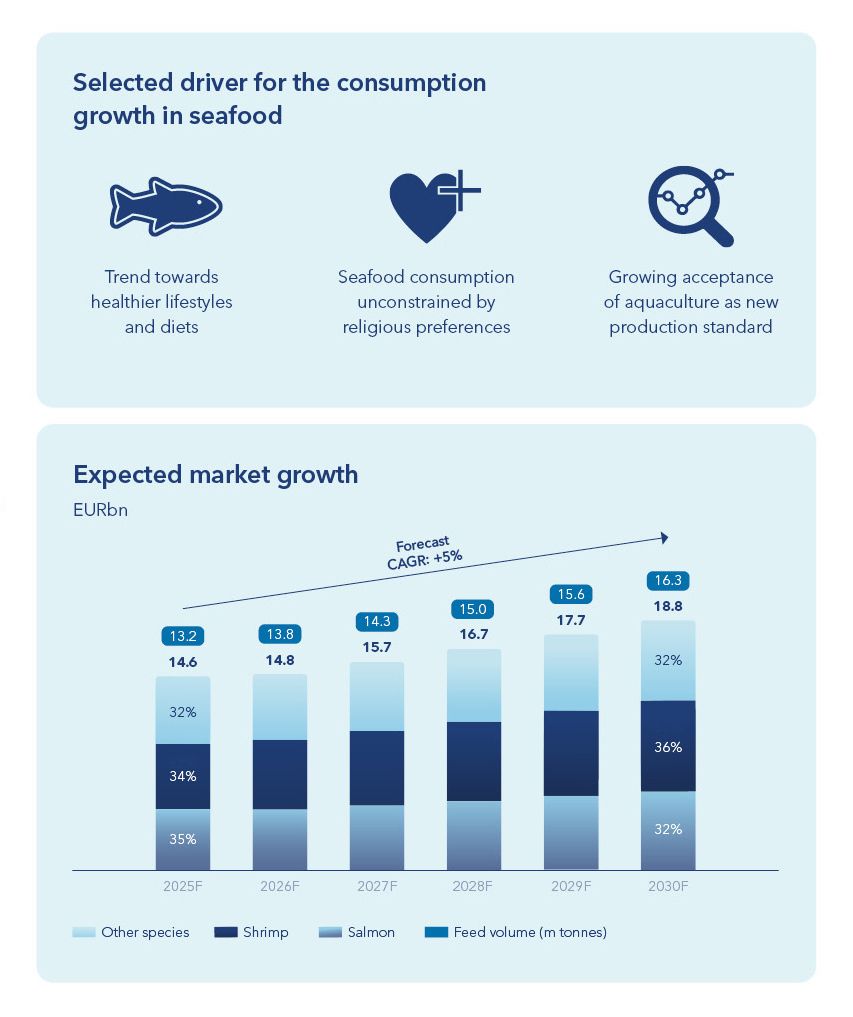
It is estimated that the high-value species feed market, covering premium species such as salmon, shrimp, sea bass and trout, will have an average growth at around 5% a year in terms of value and 4% in terms of volumes in the period 2025 to 2030F.
Among the global providers of feed solutions for high-value species, BioMar ranks third based on total volumes including joint ventures. This position is reflecting our leadership in a growing and attractive segment of the aquaculture industry.
Market growth drivers

Population growth and rising wealth
Global population growth, coupled with a growing middle-class, is driving a long-term rise in protein consumption. Aquaculture is well-positioned to meet this demand, continuously developing even more efficient and responsible feeding and farming solutions.

Health and sustainability preferences
Seafood is increasingly regarded as the preferred source of animal protein, driven by consumer preferences for healthier and more sustainable diets. Aquaculture offers superior feed conversion ratios and lower carbon footprint compared to other protein sources. These attributes position farmed seafood as a principal contributor to a growing demand for sustainable high-value animal protein.

Aquaculture surpassing wild catch
To protect the natural populations of fish in the sea, the catch of wild fish is restricted, and aquaculture has overtaken wild catch as the primary source of seafood. This shift reflects the increasing reliance on farmed seafood to meet global consumption needs in a more sustainable manner.
Shift towards high-value species
High-value aquaculture species including salmon, shrimp and other high value species are consistently outgrowing low-value species in both volume and market value. This trend reflects rising consumer demand for premium seafood.